








































































































































































































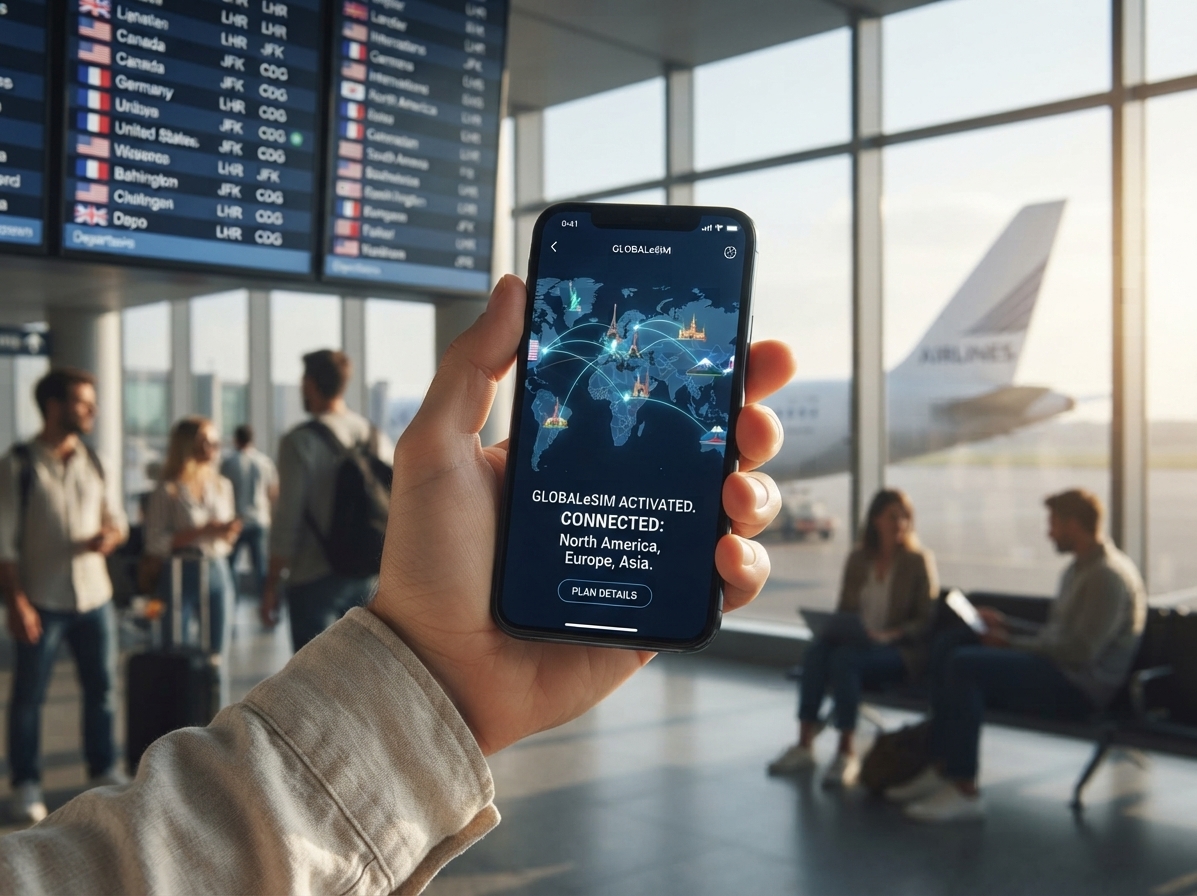
Landing in Rome, taking a train to Schweiz, then flying to London should not mean hunting for a new SIM card at every border. So, can I use eSIM in multiple countries? Yes – but the experience depends on the type of plan you buy and the countries included in its coverage.
For travelers visiting more than one destination, a regional or global eSIM can keep data available as you move between supported countries. You install the eSIM digitally before departure, select it for mobile data when you arrive, and stay connected for maps, messages, bookings, work, and ride-hailing without swapping physical SIM cards or relying on unpredictable roaming charges.
Can I Use eSIM in Multiple Countries With One Plan?
You can, provided your eSIM plan is designed for multi-country coverage. A country-specific plan is built for one destination. For example, a eSIM USA plan may give you service in the United States, but stop working once you cross the border into Kanada. That can be the most cost-effective choice for a single-country trip, but it is not the right fit for an itinerary with several stops.
A regional eSIM covers a defined group of countries. A Europa plan, for instance, may support travel across many European destinations under one data allowance. Regional coverage is often a practical option for vacations, business trips, backpacking routes, and rail itineraries where you will cross several borders in the same area.
A global eSIM plan is intended for travelers moving across regions, such as a trip from the United States to Europe and then Asia. It can reduce the need to purchase separate plans for each leg of the journey. The trade-off is that global coverage can cost more per gigabyte than a local plan, so it makes the most sense when convenience and continuous access matter more than having the lowest possible data rate in every country.
The key detail is not simply whether a plan says it works internationally. Check the plan’s included destination list before buying. Coverage varies by product, and not every country in a region is always included on every plan.
How an eSIM Connects as You Cross Borders
An eSIM is a digital version of a SIM card. It lets your phone download a mobile plan directly, rather than requiring a physical card from a store. Once installed, your phone connects to a supported local network in each country covered by the plan.
With a multi-country plan, you normally do not need to reinstall anything at the border. Your device searches for an available partner network in the next covered destination and connects automatically. It may take a few moments after landing or crossing a border, especially if your phone has been in airplane mode. Turning airplane mode on and off, then allowing a minute or two for network registration, often resolves a delayed connection.
This is where multi-network access can be especially helpful. In supported destinations, the eSIM can use available local networks instead of tying you to one physical carrier card for the entire trip. Depending on the plan and location, 4G or 5G access may be available.
Choose the Plan That Matches Your Route
The best eSIM for multiple countries is not always the broadest one. Start with your actual itinerary, including layovers if you expect to leave the airport or need data between flights.
If you are spending two weeks in Frankreich, a country-specific France plan may be the simplest value. If your schedule includes France, Spanien, Portugal, and Italy, a Europe regional plan usually creates a smoother experience. If you are traveling from New York to Japan, South Korea, and Australia, look for a global plan or compare regional options based on the countries you will visit and how much data you expect to use.
Think about your data habits, too. Navigation, messaging, email, and occasional social media use relatively modest amounts of data. Video calls, cloud backups, hotspot use, high-resolution uploads, and streaming can consume a plan much faster. A business traveler who needs video meetings may prefer a larger allowance, while a vacation traveler using maps and chat apps may be comfortable with less.
For a longer trip, consider whether top-ups are available. Being able to add data through an app is usually more convenient than finding a local store after your allowance runs low. It also gives you more control over spending because you can add only what you need.
Can You Store More Than One eSIM on Your Phone?
Most newer eSIM-compatible phones can store multiple eSIM profiles. This is useful if you want separate plans for different parts of a long journey, or if you want to install an upcoming plan before you leave home. However, the number of profiles your phone can store and the number it can use at the same time depend on the device model.
Many phones allow one eSIM to be active for cellular data while keeping your primary physical SIM or another eSIM available for calls and texts. Some newer models support two active eSIM lines. Check your device settings and manufacturer specifications before your trip, especially if you need your home number to remain active.
Keeping your usual number on can be convenient for receiving bank verification texts or calls. But be careful: leaving your home line enabled for data can trigger carrier roaming charges. In your cellular settings, set the travel eSIM as the mobile data line and turn off data roaming on your home line. If your travel eSIM’s installation instructions require data roaming to be enabled, enable it only for that eSIM.
Install Before Departure, Activate at the Right Time
Installing an eSIM and activating its plan are not always the same thing. Installation adds the digital profile to your device. Activation starts the plan’s validity period, which may begin when the eSIM first connects to a supported network or, for some products, on a specified activation date.
That distinction matters. Install your eSIM while you still have stable Wi-Fi at home, in the office, or at your departure airport. Save the installation details and confirmation email where you can access them offline. Then follow the plan instructions on when to turn the line on and select it for mobile data.
Before leaving, make sure your phone is unlocked and eSIM-compatible. A carrier-locked device may not accept a travel eSIM, even if it has eSIM technology. Also update your operating system if possible. Small software updates can improve network settings and reduce last-minute setup issues.
What Happens If a Country Is Not Included?
If you enter a country outside your plan’s coverage, your eSIM will not provide mobile data there. Your phone may show no service for that line, or it may not find a supported network. This does not mean the eSIM is broken. It simply means you need coverage for that destination.
For short stops in an uncovered country, Wi-Fi may be enough. For longer visits, add a country-specific plan or choose a broader regional or global plan before you travel. If you already have several eSIM profiles installed, label them clearly in your phone settings by destination. That makes it easier to select the right line when your route changes.
Also remember that an eSIM plan is usually data-first. Messaging apps, navigation, email, browser access, and internet calling work through data. If you need a local phone number, traditional voice minutes, or SMS, choose a plan that specifically includes those services. Your existing number can still receive messages if you keep that line active, subject to your home carrier’s policies and charges.
A Better Setup for Multi-Country Travel
For most travelers, the simplest approach is to select one plan that covers every confirmed stop, install it before departure, and set it as the data line when your trip begins. Keep your primary line available only when you genuinely need it, and monitor your remaining data throughout the trip.
Global eSIM makes this process practical with prepaid country, regional, and global eSIM plans designed for travelers who want connection without physical SIM swapping or roaming surprises. Choose a plan based on your route, confirm the included countries and data allowance, and keep the installation details ready before takeoff.
Your itinerary may change, but your access to the essentials should not. Check Global eSIM destination plans before you travel and choose coverage that follows you from one country to the next.
Häufige Fragen
Yes, as long as the plan is a regional or global eSIM rather than a country-specific one. A country-specific eSIM, such as a plan built for the United States, typically stops working once you cross into another country like Canada. A regional eSIM covers a defined group of countries in one data allowance, while a global eSIM extends across multiple regions, so check the included destination list before buying.
With a multi-country eSIM, the device searches for an available partner network in each covered destination and connects without reinstalling anything. This can take a few moments after landing or crossing a border, especially if the phone was in airplane mode. Toggling airplane mode off and on and allowing a minute or two for network registration usually resolves any delay in reconnecting.
Most newer eSIM-compatible phones can store multiple eSIM profiles, which is useful for installing plans for different legs of a journey in advance. Many devices allow one eSIM to handle mobile data while keeping a primary SIM or another eSIM available for calls and texts, though the number of profiles a phone can store and use simultaneously depends on the specific device model.
The eSIM will not provide mobile data in a country outside its coverage, and the phone may show no service on that line or fail to find a supported network. This doesn't mean the eSIM is broken, only that the destination isn't covered. Short stops can often rely on Wi-Fi, while longer visits call for adding a country-specific plan or choosing a broader regional or global option before traveling.
It depends on the itinerary. A regional eSIM, such as one covering several European countries, is often the smoother choice for trips confined to one area, while a global eSIM suits travelers crossing multiple regions, like from the US to Europe and Asia. Global eSIM offers prepaid country, regional, and global plans, though broader coverage can cost more per gigabyte than a local plan focused on one destination.
Get GlobaleSIM travel guides first in Google Top Stories.