










 Europe eSIM
 Canada eSIM
 Albania eSIM
 South Africa eSIM
 Dubai eSIM





























































































































































































Last Updated: April 2026
Planning your next trip but not sure if your device supports eSIM technology? You’re not alone. At GlobalESIM, we’ve helped thousands of travelers set up their international connections, and the #1 question we get is always about compatibility.
As we move into 2026, eSIM has become the gold standard for travel, but compatibility still varies between models and regions. In this guide, we’ve simplified everything you need to know to ensure you stay connected with GlobalESIM.app without the hassle of physical SIM cards.
1. Quick Check: How to Verify eSIM Support in 30 Seconds
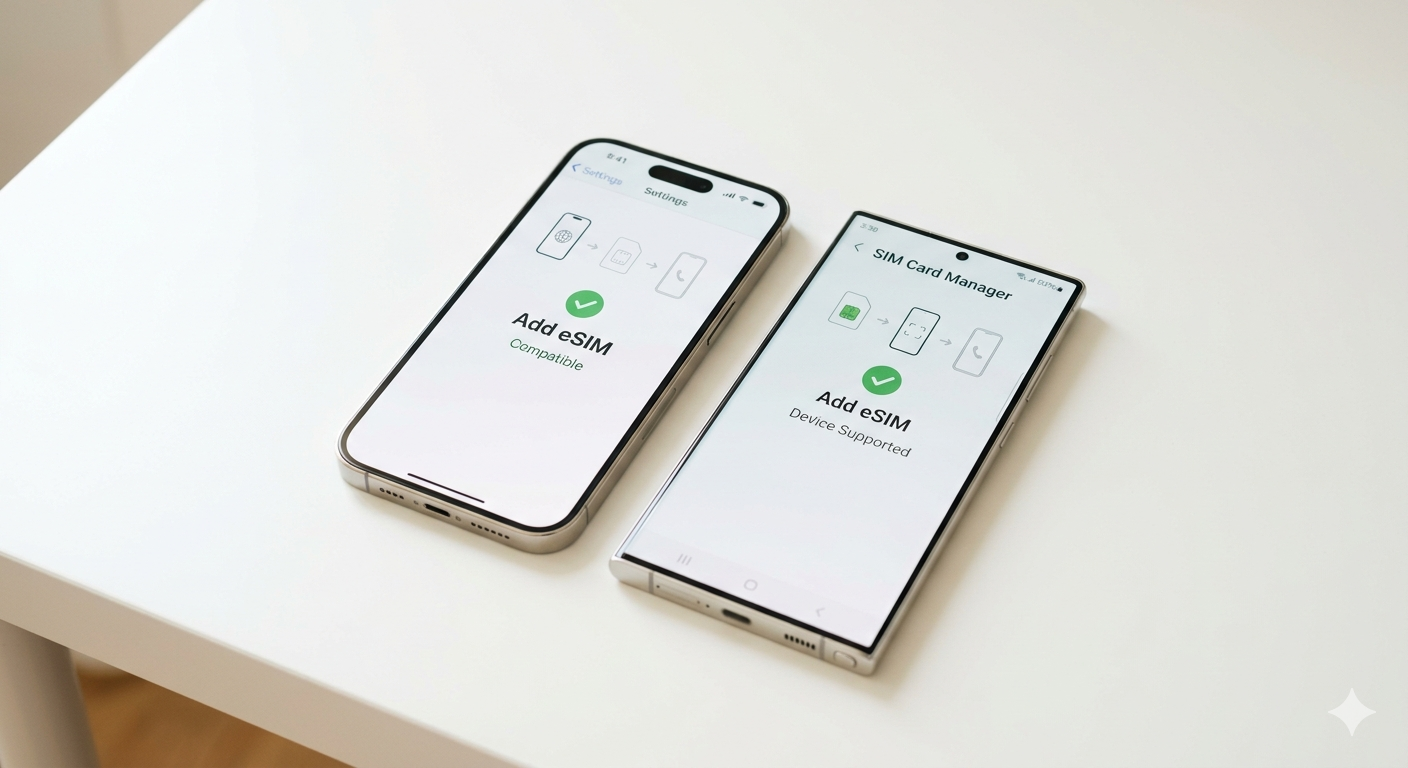
Before diving into the lists, you can check your phone’s settings right now. This is the fastest way to know:
For iPhone Users:
-
Go to Settings > Cellular (or Mobile Data).
-
Look for “Add eSIM” or “Add Cellular Plan”. If you see this option, your iPhone is eSIM-ready!
For Android Users:
-
Go to Settings > Connections > SIM Card Manager.
-
If you see “Add eSIM”, you’re good to go.
-
Alternative: Dial *#06# on your keypad. If you see an EID number in the list, your device supports eSIM.
Pro Tip from our Tech Team: If you don’t see the “Add eSIM” option but your phone is on the list below, make sure your iOS or Android version is updated to the latest software release. Sometimes a simple update unlocks the feature!
2. Compatible Devices List (Updated for 2026)
Apple iPhone
Apple led the way by removing physical SIM slots in several regions. All iPhones from the XS/XR series onwards are compatible:
-
iPhone 16 Series (Pro Max, Pro, Plus, Standard)
-
iPhone 15 & 14 Series (Note: US models are eSIM-only)
-
iPhone 13, 12, & 11 Series
-
iPhone SE (2nd and 3rd Generation)
-
iPhone XS, XS Max, & XR
Samsung Galaxy
Samsung offers extensive eSIM support across its premium and mid-range lines:
-
Galaxy S26, S25, & S24 Series (All models)
-
Galaxy S23, S22, S21, & S20 Series
-
Galaxy Z Fold & Z Flip (All generations from Fold 2 onwards)
-
Galaxy A55, A54, & A35 (Select regions)
Google Pixel
The “cleanest” eSIM experience often comes from Google:
-
Pixel 10, 9, & 8 Series
-
Pixel 7, 6, & 5 Series
-
Pixel 4, 4a, & 3 Series
Other Brands
-
Xiaomi: 14T, 13T Pro, 12T Pro, and newer models.
-
Motorola: Edge 50, Razr 50, and Razr 2023/2024 models.
-
Oppo/Vivo: Find X7, Reno 12, and flagship series.
3. Important Exceptions to Keep in Mind
Even if your model is on the list, there are two “deal-breakers” you must check:
-
Carrier Lock: Your phone must be unlocked. If you are still under a contract with a local carrier that restricts the device, the eSIM will not activate.
-
Regional Restrictions:
-
iPhones from Mainland Kina, Hong Kong, and Macau typically do not support eSIM (they use two physical SIM slots instead).
-
Some older Samsung models purchased in specific Asian markets might not have eSIM enabled.
4. Why Switch to eSIM for Your 2026 Travels?
-
Instant Activation: Buy your plan online and scan a QR code. No waiting for shipping or hunting for kiosks at the airport.
-
Keep Your Number: Use your physical SIM for WhatsApp/Calls and the GlobalESIM for affordable data.
-
Eco-Friendly: Zero plastic waste, zero packaging.
Ready to Connect?
Now that you’ve confirmed your device is compatible, it’s time to find the perfect plan for your destination. We offer hundreds of options tailored for every type of traveler.
Find Your Destination and View All eSIM Plans Here
Frequently Asked Questions
On iPhone, go to Settings, then Cellular or Mobile Data, and look for 'Add eSIM' or 'Add Cellular Plan'; seeing that option confirms eSIM readiness. On Android, check Settings, then Connections, then SIM Card Manager for an 'Add eSIM' option. Alternatively, dial *#06# on either platform: if an EID number appears in the results, your device supports eSIM technology.
The guide notes that if your phone appears on the compatible devices list but 'Add eSIM' isn't showing, updating your iOS or Android software to the latest release often unlocks the feature. A simple system update can resolve this before you assume your device isn't supported, so check for pending updates before troubleshooting further.
No. The guide flags Mainland China, Hong Kong, and Macau as regional exceptions where iPhones typically don't support eSIM, since those models use two physical SIM slots instead. Travelers whose devices were purchased in these regions should verify eSIM availability directly, as regional restrictions can override an otherwise compatible model.
Samsung's Galaxy S20 through S26 series, the Z Fold and Z Flip lines from Fold 2 onward, and select A-series models support eSIM. Google Pixel 3 through 10 series are covered, along with select Xiaomi models like the 14T and 13T Pro, Motorola's Edge 50 and Razr lines, and flagship Oppo and Vivo devices such as the Find X7 and Reno 12.
Two key exceptions can prevent activation even on a supported model: your phone must be carrier-unlocked, since a device still restricted under a local carrier contract won't activate an eSIM, and certain regional restrictions apply, such as China, Hong Kong, and Macau iPhones or some older Asian-market Samsung models lacking eSIM support entirely.
Get GlobaleSIM travel guides first in Google Top Stories.