









































































































































































































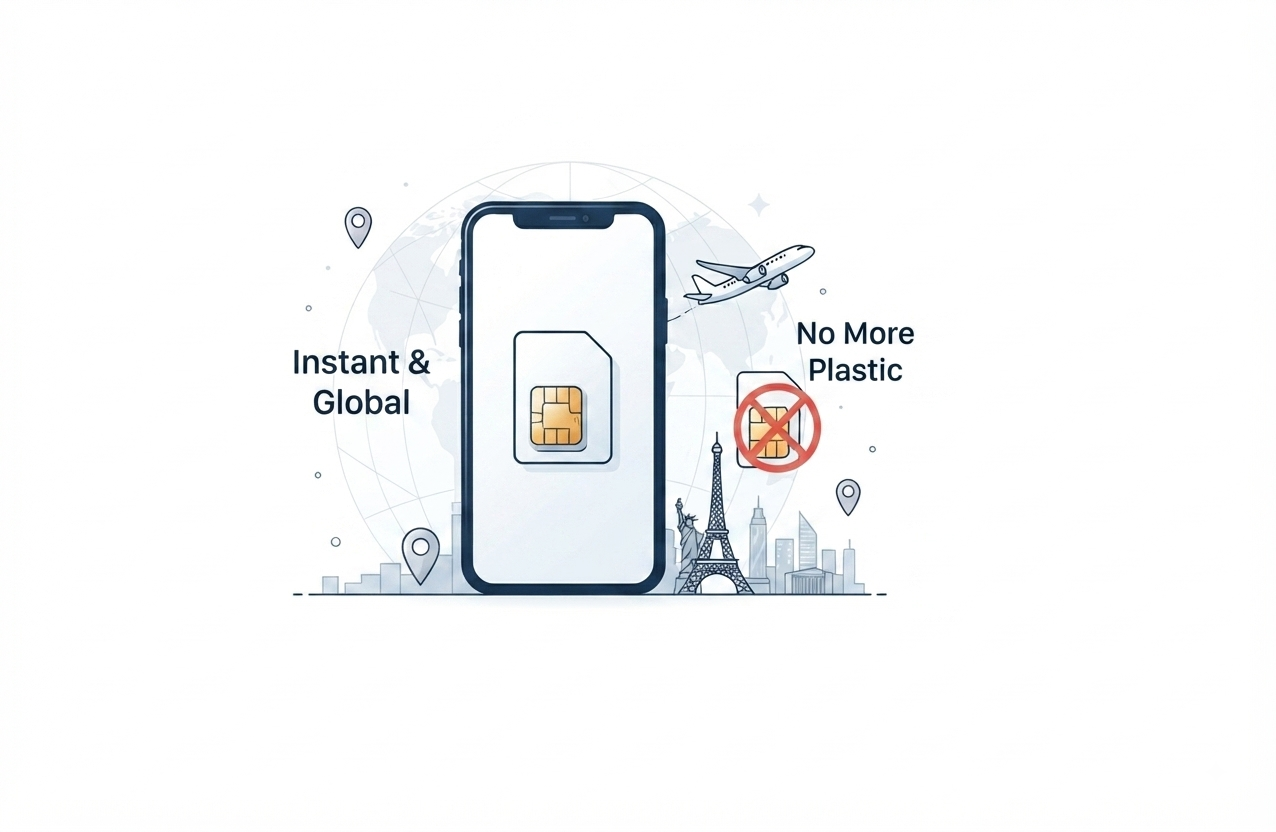
Your first minutes after landing are usually the least convenient time to solve a connectivity problem. You may need a boarding pass, hotel directions, a ride, a translated address, or a way to tell family you arrived safely. When you buy eSIM online before travel, your mobile plan is ready before the airport doors open, so you can connect without hunting for a SIM kiosk or accepting unexpected roaming charges.
For travelers who depend on maps, messaging, work apps, and booking confirmations, buying ahead is not just a convenience. It is a practical way to start a trip with control over how and when you get online.
Why buy eSIM online before travel?
A prepaid travel eSIM lets you arrange data service digitally, without removing your usual physical SIM card. After purchase, installation details are delivered electronically. You add the eSIM to a compatible phone, follow the setup instructions, and activate it according to your plan’s requirements.
The main advantage is timing. Airport Wi-Fi can be slow, unavailable at the moment you need it, or require a text-message verification you cannot receive. A local SIM store may be closed after a late arrival, and comparing plans at a counter is rarely how anyone wants to spend the first hour of a vacation or business trip. With an eSIM already installed, you can turn on the plan when you arrive and get moving.
It also makes costs easier to anticipate. Instead of leaving international roaming running and hoping the bill stays reasonable, you choose a prepaid allowance for the country, region, or length of trip. You know what you have purchased before departure and can monitor use as your plans change.
For many travelers, keeping their primary number available is another benefit. You can leave your regular SIM in place for calls or verification messages while using the travel eSIM for mobile data. The right setup depends on your carrier, device, and account settings, but dual-SIM capability can make international travel much less disruptive.
What to check before you purchase
The best plan is not always the largest data package. Start with where you are going, how long you will be there, and how you use your phone when away from Wi-Fi. A weekend city break built around maps, messaging, and restaurant searches needs a different amount of data than a two-week work trip with video calls and cloud files.
First, confirm that your phone supports eSIM technology and is carrier-unlocked. Most newer smartphones do, but compatibility varies by exact model and region. An unlocked device is essential because a carrier-locked phone may not be able to add a travel eSIM from another provider. Check this before purchase, not while standing at the gate.
Next, choose coverage that matches your itinerary. A country plan can be a cost-effective fit if you are staying in one destination. A regional plan is often more convenient for a multi-country trip because it can reduce the need to install separate plans as you cross borders. A global plan may suit frequent flyers, digital nomads, and travelers whose route is still changing.
Also consider whether you only need data or want voice minutes and SMS as well. Data-only service is enough for most people using messaging apps, maps, ride-hailing, email, and browser-based tools. However, a plan with calling and texting can be useful when you need a local-style number for reservations, client contact, or services that do not work well through an app.
Finally, review the plan validity period and activation policy. Some plans begin their validity when installed, while others begin when they first connect in the destination. Install early only when the instructions support it. This small detail prevents losing valuable plan days before your trip starts.
Install before departure, activate at the right time
Buying early does not necessarily mean activating early. In most cases, the sensible approach is to purchase and install your eSIM while you still have reliable home or hotel Wi-Fi, then activate the travel line when you reach your destination.
Installation is usually completed by scanning a QR code or entering the provided details manually. Once the eSIM has been added, label it clearly in your phone settings, such as “Travel Data” or the destination name. That makes it easier to select the correct line later, especially if your phone holds more than one eSIM.
Before leaving, open your cellular settings and confirm a few essentials. Set your primary line to remain available if you need it, choose the travel eSIM for cellular data when appropriate, and turn off data roaming on your regular line if you want to avoid accidental charges. Then make sure data roaming is enabled on the travel eSIM if the installation instructions require it. Travel eSIMs commonly use partner networks, so this setting can be necessary for the plan to connect.
Keep the installation email or activation details available offline. A screenshot or saved PDF can help if you need to review settings after landing. It is also wise to update your phone software before departure, since an update is easier to manage on familiar Wi-Fi than during a trip.
Choose data based on your actual travel habits
Data use varies more than travelers expect. Navigation, messaging, and email use relatively little data. Social feeds with auto-playing video, cloud photo backups, streaming, video calls, and hotspot use can consume a plan quickly.
If you are unsure where you fall, begin by thinking about your daily routine. A traveler using maps throughout the day, sending photos, and booking activities may want a more generous plan than someone who spends most evenings on hotel Wi-Fi. Business travelers should factor in video meetings, large attachments, and the possibility of tethering a laptop.
You can reduce unnecessary use without making the trip feel restricted. Download maps, playlists, translation languages, and entertainment before departure. Turn off automatic app updates and photo backups on cellular data. Use Wi-Fi for large uploads when it is secure and reliable. These habits preserve data for the moments when mobile access matters most.
A smaller plan with a straightforward top-up option can be a good choice for flexible travelers. On the other hand, if you know you will work remotely or move frequently between places without dependable Wi-Fi, buying more data upfront may offer better peace of mind. There is no single right amount. The goal is to match the plan to your trip rather than paying for capacity you will never use.
What happens when you land
After arriving, switch on the travel eSIM line and select it for mobile data if it is not already set. Give the device a few minutes to register on a local network. In many cases, a quick airplane-mode toggle or phone restart can help refresh the connection.
If service does not appear immediately, do not assume the plan has failed. Check that the eSIM is turned on, that the correct line is selected for data, and that roaming is enabled on the travel eSIM if required. Confirm you have reached the plan’s supported destination, since a country-specific plan will not connect outside its listed coverage area.
Multi-network coverage can be especially valuable here. If one network has a weak signal where you are, your device may be able to connect to another supported local network. Performance still depends on local conditions, handset capability, congestion, and location, but broader access gives travelers more options than relying on a single connection path.
A simple pre-flight connectivity check
Before heading to the airport, take five minutes to confirm these four items:
- Your phone is eSIM-compatible, unlocked, and updated.
- Your selected plan covers every country on your itinerary and has suitable validity.
- The eSIM is installed, clearly labeled, and its details are saved offline.
- Your cellular settings are prepared so your travel eSIM handles data and your regular line does not create roaming surprises.
That preparation turns mobile connectivity into one less travel variable. You are not promising yourself perfect coverage everywhere, because no mobile service can guarantee that across every building, train route, or remote area. You are giving yourself a much better starting point: a plan chosen for your destination, installed before departure, and ready when you need it.
Global eSIM offers prepaid destination, regional, and global eSIM plans for travelers who want to arrive connected with no physical SIM swapping. Before you leave, check the destination plans that fit your route, data needs, and travel dates, then set up your eSIM while you still have time to travel with confidence.
Frequently Asked Questions
The first minutes after landing are typically the worst time to solve a connectivity problem, since airport Wi-Fi can be slow or require a text verification you cannot receive, and a local SIM store may be closed after a late arrival. Buying an eSIM online before travel means your mobile plan is already installed, so you can activate it the moment you land instead of hunting for a kiosk or comparing plans at a counter.
Confirm your device is eSIM-compatible and carrier-unlocked before buying, since compatibility varies by exact model and region and a carrier-locked phone may be unable to add a travel eSIM from another provider. Check this before departure, not at the gate. Also review your plan's coverage, validity period, and whether it starts counting down on installation or only once it first connects at your destination.
It depends on your itinerary. A single-country plan is cost-effective if you're staying in one destination for the whole trip, while a regional plan is usually more convenient for a multi-country route because it avoids installing a separate plan at every border. A global plan tends to suit frequent flyers, digital nomads, and travelers whose route may still change, similar to the destination, regional, and global eSIM plans Global eSIM offers.
In many cases, yes. Dual-SIM capability lets you leave your usual physical SIM in place for calls or verification messages while a travel eSIM handles mobile data, so your primary number stays reachable. The exact setup depends on your carrier, device, and account settings, so check your phone's cellular settings before departure to confirm your regular line stays available while the eSIM manages data.
The right amount depends on how you actually use your phone away from Wi-Fi, rather than simply buying the largest package available. A weekend trip built around maps, messaging, and restaurant searches needs far less data than a two-week work trip involving video calls and cloud files. Downloading maps, playlists, and translations in advance, plus turning off automatic app updates and photo backups, helps a smaller plan go further.
Get GlobaleSIM travel guides first in Google Top Stories.