






























































































































































































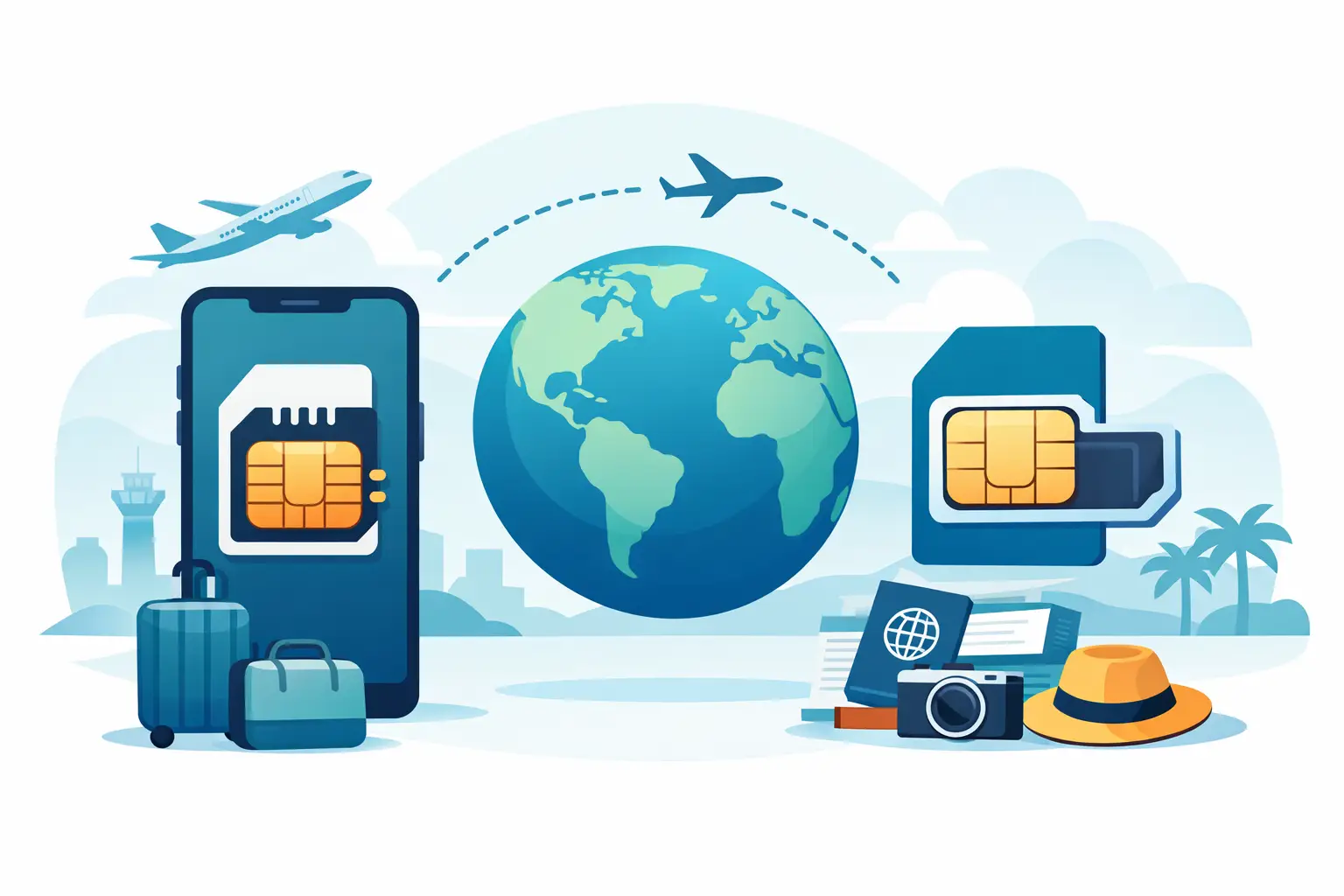
Landing in a new country without working data can turn a simple airport transfer into a stressful search for Wi-Fi. In the eSIM vs physical SIM decision, the better choice usually comes down to how quickly you need to connect, whether you want to keep your home number active, and how many borders your trip crosses.
For most travelers with a compatible phone, an eSIM removes the biggest pain points of buying local service abroad: store visits, tiny cards, activation delays, and unexpected roaming charges. A physical SIM still has a place, but it is no longer the default for convenient international connectivity.
eSIM vs Physical SIM: The Core Difference
A physical SIM is the small plastic card placed in your phone’s SIM tray. To use a local plan, you typically buy the card in person or have it delivered, insert it, and follow the carrier’s activation steps. If your phone has only one physical SIM slot, replacing your home SIM can also mean losing easy access to calls or texts sent to your usual number.
An eSIM is a digital SIM built into compatible smartphones, tablets, and some laptops. Instead of inserting a card, you purchase a plan online and install it using the digital instructions sent to you. The plan can be ready before departure, so you can connect shortly after landing rather than searching for a carrier counter.
The technology behind both options serves the same purpose: connecting your device to a mobile network. The travel experience is where they differ most.
Why eSIM Is Usually Easier for Travel
The main advantage of an eSIM is preparation. You can choose a country, regional, or global data plan from home, install it while you have reliable Wi-Fi, and activate it when your trip begins. That is especially useful when you need maps, ride-hailing, hotel messages, or booking details immediately after arrival.
An eSIM also helps you keep your primary SIM in your phone. Many travelers use their home line for calls, two-factor authentication, and messages while assigning mobile data to the travel eSIM. This setup can reduce disruption without relying on expensive daily roaming packages.
For multi-country trips, regional and global eSIM plans can be more practical than buying a new physical card in every destination. You manage one digital plan, monitor usage in an app, and top up when needed. Plans with multi-network access can also provide more connection options as you move through covered areas.
Where a Physical SIM Can Still Make Sense
A physical SIM may be the right answer if your device does not support eSIM technology. Compatibility varies by phone model and, in some cases, by the device version sold in a particular market. Checking your phone’s settings and specifications before purchase avoids a last-minute surprise.
Physical SIMs can also suit travelers who need a long-term local phone number for everyday life in one country. Depending on local requirements and the type of plan, a traditional SIM may be better aligned with local banking, government, or account-verification needs. For a short vacation or business trip, however, those benefits often do not outweigh the extra setup.
There is one more practical consideration: a physical card can be lost, damaged, or misplaced when you remove it. An eSIM does not require opening the SIM tray, which means one less small but important item to keep track of while traveling.
Cost, Coverage, and Speed: What Actually Matters
Neither format automatically guarantees the lowest price or fastest data. Plan value depends on your destination, data allowance, coverage network, and whether you need voice minutes or SMS in addition to data. A low-cost local physical SIM may look attractive, but consider the time required to buy it, the activation process, and whether you will have data before reaching the store.
With a prepaid eSIM, you know your data allowance and price before you travel. That makes it easier to control spending and avoid roaming surprises. Choose a plan sized for how you travel: light users may only need maps and messaging, while remote workers, content creators, and frequent video callers should allow for more data.
For performance, look for plans that support 5G where available and connect through established local networks. Your real-world speed will still depend on location, network conditions, phone capabilities, and local coverage.
A Quick Way to Choose
Choose an eSIM if you want to arrange connectivity before departure, keep your physical SIM in place, and avoid finding a store after arrival. It is particularly useful for short trips, frequent travel, and itineraries that include multiple countries.
Choose a physical SIM if your phone is not eSIM-compatible or you have a specific long-term reason to maintain a local physical number. In either case, confirm coverage, device compatibility, activation requirements, and how much data you will realistically use.
Before you fly, check destination eSIM plans from Global eSIM so your data connection is ready when your trip starts.